


Mushroom Identification
4.130.00 Reviews
App Specs
- Version
- 4.0.8
- Updated On
- License
- Free
- Downloads
- 1,000,000+
- Developer
- Battery Stats Saver
- Categories
- House & Home
- Platform
- Android
Screenshots
 Analysis by AppCompare
I approach mushroom identification as a useful starting point, not a shortcut to deciding what is safe to eat. A photo can help me narrow down what I’m looking at, but look-alikes, lighting, and local variation make confident identification a job for careful checking. That distinction matters with an app in this category: it can make a walk more curious and informative, while still leaving important decisions to the user.
What the free access does—and does not tell me
Mushroom Identification is a free House & Home app from Battery Stats Saver, with in-app purchases listed at prices ranging from $0.99 to $99.99 per item. That gives me a clear starting point for trying it without paying upfront, but it doesn’t tell me which features, if any, sit behind a purchase or what each option includes. I’d check the purchase details in the app before spending money rather than assuming the free version covers everything I want.
The app has a 3.9 average from around 3,400 ratings, and more than 500,000 installs. Those figures suggest that plenty of people have tried it, but they don’t establish whether a particular identification is accurate or whether the app suits my local fungi. I would treat feedback as context, not as a substitute for checking a mushroom carefully.
It is intended for Everyone 10+ and runs on Android 8.0 or later. The current version is 4.0.8, and it was released on November 19, 2021. For me, the practical point is simple: check that an older phone meets the operating-system requirement before planning to use it on a hike.
Using Mushroom Identification in the Field
I’d use this section to focus on a practical field routine: treat a photo-based suggestion as a lead, then slow down and compare several visible features before drawing conclusions. Taking clear views from different angles and noting the surrounding habitat can make later research more useful, especially when a quick trail-side glance leaves room for doubt.
A photo can begin the search, not finish it
For a casual walk, the appeal is immediate: I can use a picture to get possible names instead of trying to remember a description later. That is most helpful when I’m curious about a mushroom and want a lead to investigate. I wouldn’t treat a quick match as proof, especially if the specimen is damaged, partly hidden, wet, or photographed in dim light. Those conditions can make a visual comparison less useful, and a close match on a screen may still miss details that matter.
A better routine is to take more than one clear view before moving on: show the cap, the underside, and the stem, and include the mushroom in its surroundings. If the app accepts only one image at a time, I can still use separate attempts to compare different angles. I’d also make a note of where it was growing and what the surrounding area looked like. Those simple observations help me assess a suggested identity rather than relying on a single photo.
Worth Reading Before You Choose

Flipboard Shows What News Apps Must Do Beyond the Feed

Switching to Android Auto Means Rethinking Your Driving Routine

Google Calendar Makes a Crowded Week Easier to Manage

Ludo King Makes the Most of the Minutes Between Plans

Baby Panda World Brings Quick Play to Modern Phones, but Its Game Library Feels Busy

ESPN’s Live Game View Makes Following Close Games Easier
That workflow is especially handy for a family walk or a nature journal. I can photograph an unfamiliar find, look at possible candidates, and save the question for later research without handling or collecting it. For someone who wants to learn names and notice patterns, that is a real benefit even when the result remains uncertain.
Make identification safer and more useful
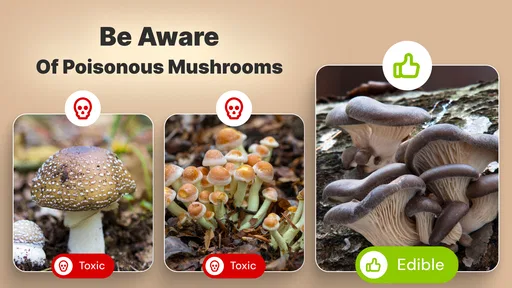
The most important limitation is the one I’d keep in mind every time: never use an image match alone to decide whether a mushroom is edible. A mistaken identification can have serious consequences. If I’m foraging to eat, I’d verify the result with a knowledgeable local expert and reliable regional references, and I’d skip any specimen that remains in doubt. An app can support learning; it cannot make uncertainty disappear.
Location and season also affect what I should expect to find. A mushroom that resembles a familiar species may have a different counterpart in another region, and a generic match may not account for local conditions. I’d use the app to generate questions—what features separate these candidates, and which details should I inspect?—rather than treating its first suggestion as a final answer.
There is a practical privacy trade-off whenever a tool uses location-related features. Before enabling anything, I’d consider whether I actually need maps or location tracking for the outing. If I only want to identify a photographed mushroom, I can decide whether location services add enough value to justify sharing my whereabouts with an app. I’d also avoid posting precise foraging spots publicly; keeping a discovery private can protect both the site and my own routine.
Cost, alternatives, and where the app fits
Compared with a printed field guide, a photo-based app is quicker to consult and easier to carry, while a book can offer a structured way to compare several features without depending on a camera match. Compared with a general web search, an identification app can make the first step feel more focused, but search results may expose me to broader expert discussions and regional sources. I see these as complementary tools, not mutually exclusive choices.
The free entry point makes sense for someone who wants to explore the subject casually before deciding whether a paid option is worthwhile. The range of possible in-app purchase prices is wide, so I wouldn’t call every purchase good value without knowing what it unlocks. If I only need occasional help naming a mushroom, I’d start free and assess whether the app actually improves my process. If I need dependable, region-specific guidance for harvesting, I’d prioritize a qualified local source over paying for features whose scope I haven’t checked.
Who is likely to get the most from it?
I think it is best suited to curious walkers, beginner naturalists, and people who enjoy keeping a record of what they encounter. A realistic use case is spotting an unfamiliar mushroom beside a trail, taking a clear set of photos, and using the app later at home to compare candidates and learn the vocabulary around them. That approach turns a brief moment outdoors into a small research exercise without putting pressure on the app to make a safety decision.
It is less suitable for anyone who wants a guaranteed edible-or-poisonous verdict, or who expects a single snapshot to settle a difficult identification. It may also frustrate someone who needs a dependable answer in poor light or while moving quickly. In those situations, waiting to take better pictures, consulting a field guide, or asking an experienced local identifier is the more sensible choice.
First impressions and the identification process
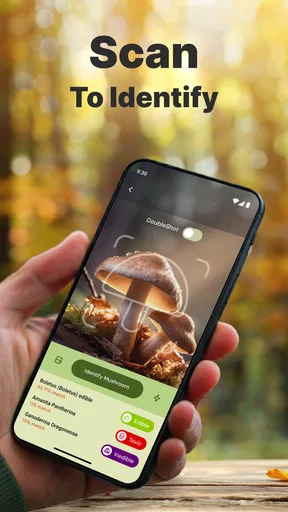
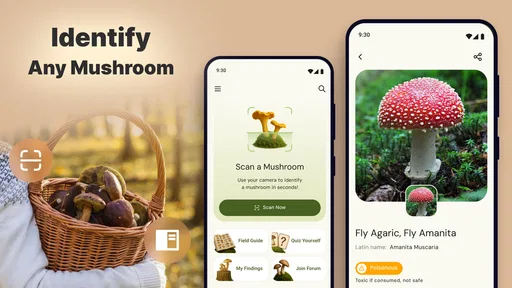
The first thing I noticed about Mushroom Identification was its sleek and user-friendly interface. When you open the app, you’re greeted with a clean design that makes navigation a breeze. Whether you’re a tech newbie or a seasoned smartphone user, you’ll find it easy to get started. The app is available for both Android and iOS, so no matter what smartphone you own, you’re covered.
Features That Stand Out
Now, onto the juicy bits. This app is packed with features, making it more than just a glorified picture book of mushrooms. It has a robust database that includes thousands of mushroom species. You can search by name or, even cooler, by snapping a photo of your find. The image recognition feature is surprisingly accurate, and it quickly matches your mushroom to potential candidates.
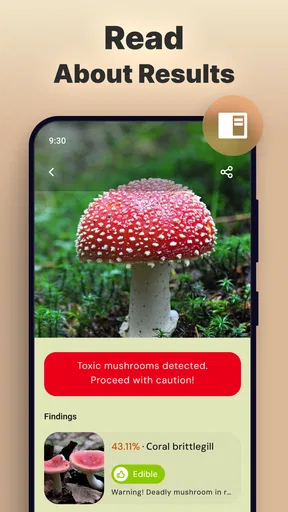
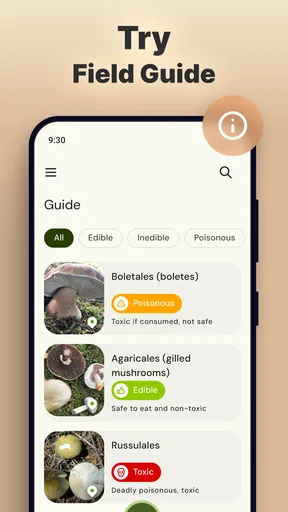
One of my favorite features is the detailed descriptions. Each mushroom profile includes information about its habitat, edibility, and possible look-alikes. This is crucial because, as you might know, some mushrooms can be toxic. The app even provides tips on how to safely forage for mushrooms, which is a nice touch.
Digging Deeper: The Educational Aspect
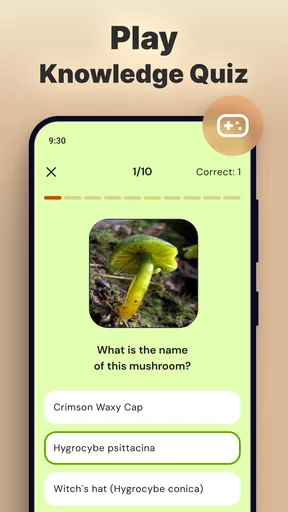
If you’re someone who loves to learn, this app has got you covered. There’s a section dedicated to mushroom foraging tips and tricks, complete with safety guidelines and anecdotes from experienced foragers. It’s like attending a mini mushroom masterclass — all from the comfort of your phone.
The app also includes a glossary of mycological terms. I found this incredibly helpful because, let’s face it, the world of mushrooms can be a bit overwhelming for beginners. With terms like “mycelium” and “spore print” explained in simple language, you’ll be talking like a pro in no time.
Community and Connectivity
Another standout feature is the community aspect. The app allows you to connect with fellow mushroom enthusiasts, share your finds, and even get advice on tricky identifications. It’s like social media for fungi lovers. There’s something really satisfying about sharing your discoveries and learning from others who share your passion.
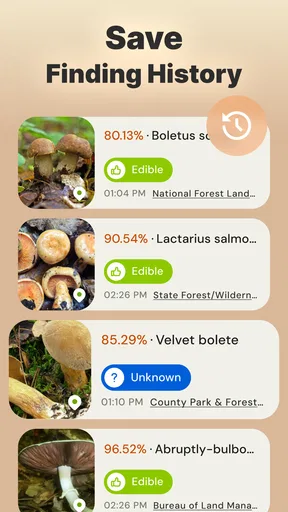
The app also syncs with your GPS to show you maps of your foraging locations. It’s a nifty way to keep track of where you’ve been and what you’ve found. Plus, it’s a great way to discover new spots nearby that you might not have considered before.
Room for Improvement?
No app is perfect, right? While Mushroom Identification is pretty impressive, there are a couple of areas where it could improve. Occasionally, the image recognition feature takes a little longer than expected, especially in low-light conditions. Also, the app could benefit from a seasonal guide, highlighting which mushrooms are in season in your area.
That said, these are minor quibbles in what is otherwise a stellar app. The developers seem committed to regular updates, so I’m hopeful these features might be added in the future.
Final Thoughts
All in all, Mushroom Identification is an invaluable tool for anyone interested in the world of fungi. Whether you’re a casual hiker, a budding mycologist, or a seasoned forager, this app has something for you. It’s informative, easy to use, and a lot of fun. Plus, it’s a great excuse to get outside and explore nature.
If you’re curious about the mushrooms in your local area or you simply want to learn more about these fascinating organisms, do yourself a favor and download Mushroom Identification. Trust me, your next walk in the woods will never be the same!
Ready to start your mushroom adventure? Head over to the app store, download it, and give it a try. Happy foraging!
Pros
- User-friendly interface for all skill levels.
- Offline database access is available.
- Comprehensive species information provided.
- High-quality images for better identification.
- Regular updates improve accuracy.
Cons
- Limited free features; subscription needed.
- Occasional misidentification of species.
- Requires camera access for full use.
- Heavy app size may affect storage.
- Advertisements can be intrusive.
FAQs for Mushroom Identification
How accurate is the Mushroom Identification app?
The Mushroom Identification app uses advanced image recognition technology to identify various species of mushrooms. While it boasts a high accuracy rate, it’s important to verify findings with multiple sources and understand that no app can be 100% accurate. Always cross-reference with field guides or consult experts for safety.
Is the app available offline?
Yes, the Mushroom Identification app provides offline access to its database. This feature is particularly useful when you're in remote areas without internet connectivity. However, remember that certain features, like real-time identification and updating the database, require an internet connection.
Can I contribute to the app’s database?
Absolutely! Users are encouraged to contribute by uploading mushroom photos and details. This helps expand and refine the database for better accuracy. Contributions are reviewed by mycology experts before being added, ensuring the integrity and reliability of the app's information.
Is the Mushroom Identification app safe for beginners?
The app is designed to be user-friendly and informative, making it suitable for beginners. It provides detailed information on each species, including edibility and toxicity. However, beginners should exercise caution and use the app as a supplementary tool, not a sole source for identifying edible mushrooms.
What are the app’s privacy policies?
The Mushroom Identification app prioritizes user privacy. It requires minimal personal information and uses secure protocols to protect user data. Location services are optional and only used to improve identification accuracy. Be sure to review the app’s privacy policy for detailed information on data handling practices.


